
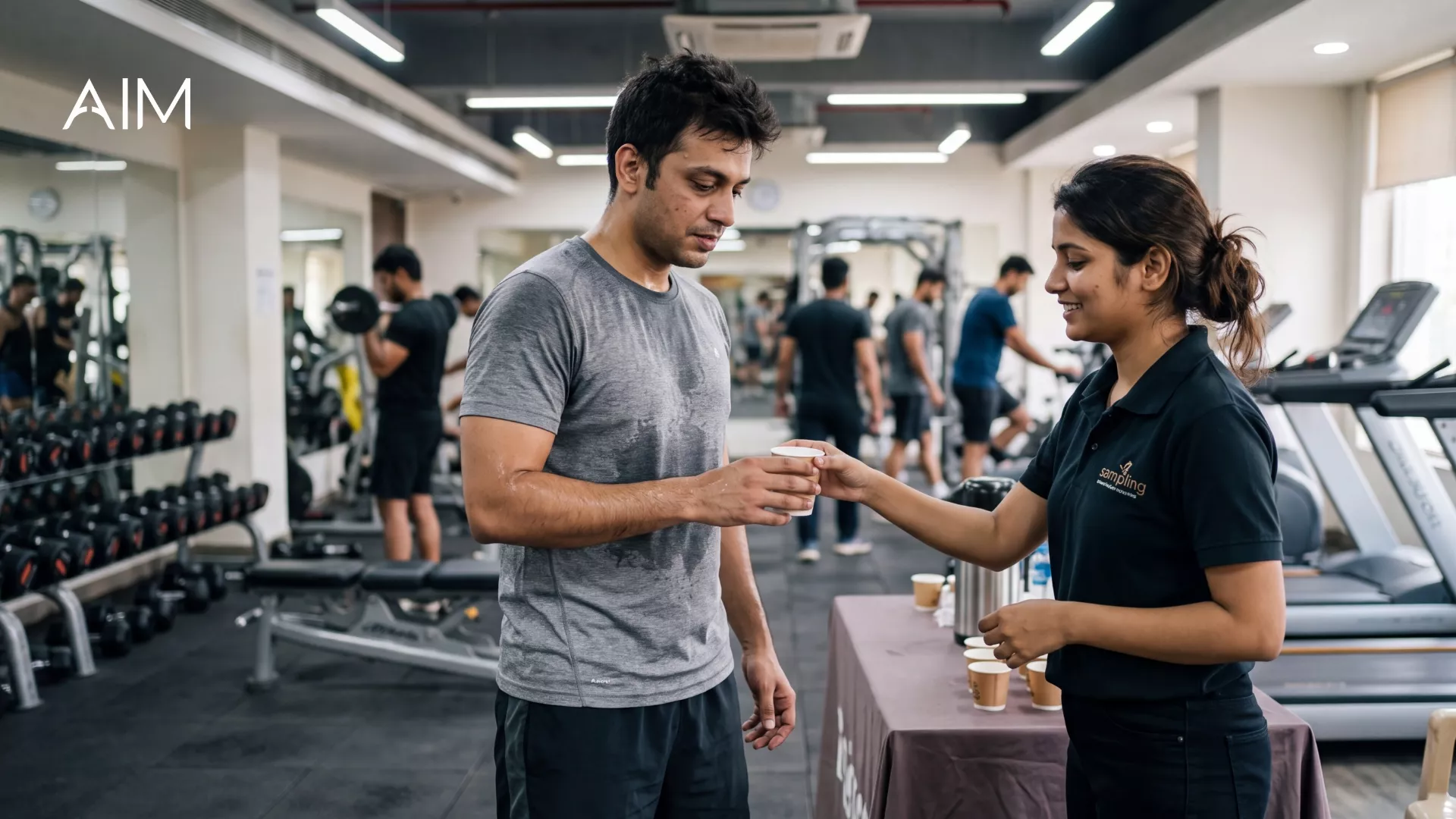


A gym looks like the perfect place to sample a health product, and often it is. It is full of people who care about what they put in their bodies, in the exact mindset your brand wants to catch. But the gym is also where a lot of sampling goes wrong, because brands walk in with the wrong product, the wrong format, or the wrong moment and wonder why a room full of ideal customers ignored them. The gym rewards the right sample and punishes the wrong one harder than almost any other venue. Here is what to sample in a gym, what falls flat, and why.
Why is a gym a strong place to sample products?
A gym pre-selects your audience before you walk in. The people there have already decided to invest time and money in their health, so for the right categories you are sampling to a room of in-market, motivated buyers rather than a random crowd. They are also regulars, visiting several times a week, which means repeat exposure a one-off event cannot match. And the setting itself lends meaning: a product sampled in a space devoted to effort and self-care borrows that association. For health, fitness, and wellness products, that combination of the right mindset, repeat visits, and a relevant environment is hard to find anywhere else.
What products work best for gym sampling?
The products that win in a gym are the ones that fit the moment and the mindset of someone who is there to train. Protein products, shakes, and bars land because they connect directly to the workout and the recovery that follows. Hydration, electrolytes, and functional drinks fit the need people feel in the room. Healthy snacks, energy products, and supplements suit an audience actively thinking about fuel and performance. Recovery and wellness products, from aids to soothing formats, match the after-workout state. The common thread is relevance: the product answers something the person is already thinking about while they are in the gym, which is why the trial feels useful rather than random.
What products fall flat in a gym, and why?
A gym punishes products that have nothing to do with why people are there. Indulgent or unhealthy snacks clash with the mindset and can even feel like an insult in a fitness space. Products with no link to health, fitness, or the body feel random, and a random sample in a focused environment gets ignored. Anything messy, heavy, or awkward to use mid-session is a poor fit, because people are moving, sweating, and carrying little. And a product that needs time, concentration, or a relaxed setting to appreciate is wasted on someone between sets. The lesson is blunt: if the sample does not fit the moment of being at the gym, the perfect audience will walk straight past it.
How does format decide whether a gym sample works?
Even the right product fails in the wrong format. A gym-goer has their hands full, is in motion, and is not going to stop for something fiddly. So a sample has to suit that reality: easy to take or carry, no mess, no equipment, nothing that demands they sit down and concentrate. A ready-to-drink format often beats a powder that needs mixing on the spot. A single, clean, grab-and-go unit beats anything that leaks or crumbles in a gym bag. The format question is simple but decisive: can this be tried or taken away without friction in a place where people are busy and moving? If not, the product barely gets a chance.
When is the best time to sample inside a gym?
Timing shapes which message lands, because a gym-goer wants different things at different points of the session. Pre-workout, energy and hydration products fit the moment. Post-workout, protein, recovery, and replenishment are exactly what the body and mind are focused on, which is often the strongest window for a sample to feel wanted rather than intrusive. Peak hours put you in front of the most people, but they are also the busiest, so engagement has to be quick and unobtrusive. Matching the product to the right point in the workout, and the activity to the gym's rhythm, is what turns a sample from an interruption into something that arrives exactly when it is useful.
Which gyms are worth sampling in?
Not every gym is the same audience, and choosing the wrong one wastes a good product. A premium fitness chain gathers higher-spending, brand-conscious members who suit considered and premium wellness products. A neighbourhood or budget gym reaches a broader, value-minded crowd better suited to everyday nutrition and hydration. A boutique studio built around a single discipline concentrates a very specific profile you can match tightly to a product. The point is to pick gyms by whether their members are your buyers, not by footfall alone, because a smaller gym full of the right people beats a bigger one full of the wrong ones. Audience fit decides the gym, the same way it decides the product.
How do you turn a gym sample into a repeat customer?
A trial in a gym is valuable precisely because the person is likely to want the product again, so the campaign should be built to capture and continue the relationship, rather than only hand over a sample. Capture who tried it, so a one-time taste becomes a contact you can follow up. Give a clear, easy way to buy or subscribe, since health products are bought on repeat and the gym-goer is a repeat buyer by nature. Tie the trial to an offer that rewards the first real purchase. The gym is one of the few venues where trial-to-subscription is a natural path, and the brands that win there treat the sample as the first step of that path rather than the end of the activity.
How does AIM approach gym product sampling?
AIM treats gym sampling as a targeting and fit exercise, not a mere venue booking. That means matching the product to the gym audience and the moment of the workout, choosing a format that works for people who are busy and moving, timing the activity to the right point in the session and the gym's rhythm, capturing who tried the product, and tracking whether they went on to buy or subscribe. The gym gathers the right people in the right mindset. AIM's job is to make sure the sample that reaches them actually fits that moment, and that the trial is measured through to a sale rather than counted as product handed out.
Right audience, wrong sample, is still a miss
The trap of gym sampling is assuming the venue does the work. It does half of it, by gathering motivated, in-market people in a relevant space. The other half is on the brand, and it is where campaigns fail: the wrong product, an awkward format, or the wrong moment turns a room full of ideal customers into a room full of people who ignored you. Get the fit right, a relevant product, a grab-and-go format, the right point in the session, and a way to turn the trial into a repeat purchase, and the gym becomes one of the sharpest sampling venues there is. Get it wrong, and the perfect audience simply walks on by.
















.webp)
























.png)