



At the end of most sampling campaigns, a report lands in the brand manager's inbox. It has a big distribution number on the first slide, a grid of photos of busy tables and smiling promoters, and a confident tone. It looks like proof. Then someone senior asks the only question that matters, what did we get for this, and the report has no answer, because it was built to show activity, not results. A sampling report should do more than prove the campaign happened. It should tell you what it returned. Here is what a real one contains, and what to stop accepting.
Quick answer: A product sampling report should show who you actually reached, how many of them converted to a purchase, and how many came back, rather than only how many samples were handed out. The core of a real report is a funnel, reached, captured, tried, bought, repeated, plus cost per buyer rather than cost per sample, a channel breakdown, qualitative feedback, and geo-tagged proof of execution. If the headline number is samples distributed, the report is measuring activity, not results.
Why most sampling reports say nothing useful
The reason reports come back empty of insight is that the campaigns behind them captured nothing to report. If no one recorded who took a sample, the report cannot say who was reached. If no code tied the trial to a purchase, it cannot say who bought. So the report falls back on what it does have, the number of samples handed out and a folder of photographs, and dresses it up as success. The weak report is not a writing problem, it is a measurement problem, and it can only be fixed by building capture and tracking into the campaign before it runs, not by asking for a nicer deck afterwards. This is the single most useful thing to understand about sampling measurement, and the one most often learned too late: the quality of the report is set at the briefing, not the debrief. By the time the campaign is over, the data either exists or it does not, and no amount of design or narrative can manufacture a conversion number from a campaign that captured no one.
What a real product sampling report should include
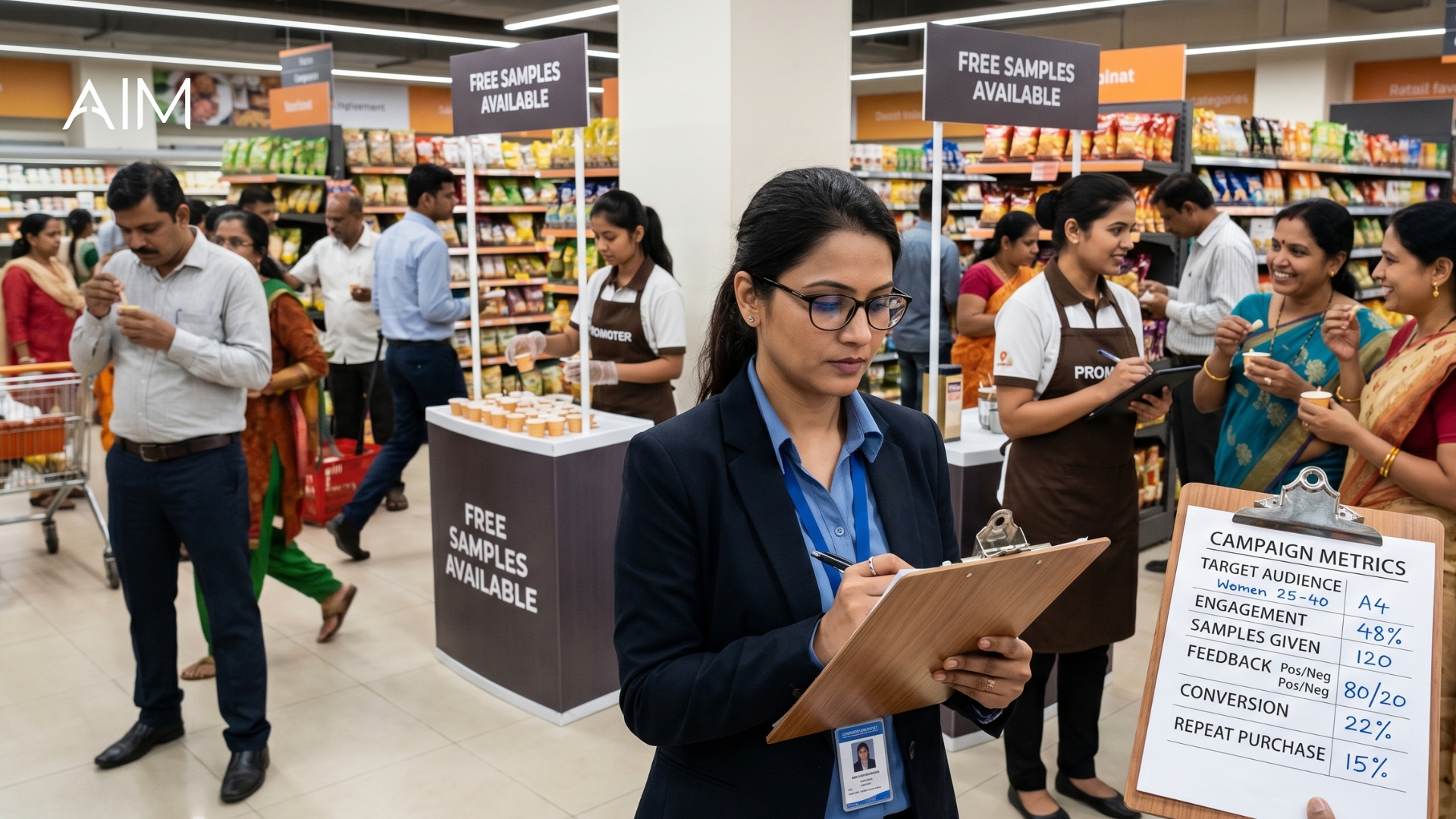
A report you can actually act on covers eight things, in roughly this order.
- Audience reached and profile. Not a headcount, but who they were, so you know the samples landed on the intended buyer rather than a random crowd.
- Capture rate. The share of triers you turned into known, contactable people. This is the number that makes everything below it possible.
- Trial-to-purchase conversion. How many captured triers went on to buy, which is the first real measure of whether sampling worked.
- Repeat and reorder. How many bought again, because in most categories the second purchase is where the value and the proof of fit actually sit.
- Cost per buyer. The budget divided by buyers created, not by samples handed out, which is the only cost figure finance can compare against other channels.
- Channel and location breakdown. Which spots and formats converted and which did not, so the next campaign moves budget toward what worked.
- Qualitative feedback. What triers actually said about the product, structured enough to be useful to marketing and to R&D, not one cherry-picked quote.
- Proof of execution. Geo-tagged, time-stamped evidence that the activity happened where and when it was billed, so you are paying for work that was really done.
What a good report lets you do next
A real sampling report is more than a scorecard for the campaign that ended, it is the plan for the next one. Because it shows conversion by location and channel, it tells you where to spend more and where to stop. Because it shows who converted, it hands marketing a profile of the buyer who actually responds, which sharpens targeting the next time. Because it captured who tried the product, it leaves behind a base of warm, contactable people the brand can re-engage long after the campaign is over. And because it reports cost per buyer, it lets sampling stand honestly beside every other channel competing for the same budget, and win or lose on the same terms. A weak report ends the conversation with a number. A real report starts the next campaign with a map. That is the difference between spending on sampling and investing in it, and it is decided entirely by what you chose to measure before the campaign began. Choose to measure buyers, and every future campaign gets sharper; choose to measure boxes, and every future campaign just repeats the same expensive guess.
The one metric to stop trusting
If you change one habit, make it this: stop treating samples distributed as the headline. It is the most reported and least meaningful number in sampling, because it says nothing about who received the samples or what they did next. It is not that distribution is irrelevant, it is the input, and it belongs in the report as context. But when it is the answer to what did we get, the report has told you how busy the campaign looked, not how well it worked. Demote the distribution number to a supporting line and insist the headline be buyers, and the whole conversation about sampling changes.
How to demand a better report, before the campaign
The most important thing to understand about a good sampling report is that it cannot be written after the fact. Every number worth having, capture rate, conversion, repeat, cost per buyer, depends on a step that had to happen during the campaign: capturing the trier and tracking the trial to a sale. So the time to insist on a real report to ypur product sampling service provider is at the briefing, not the debrief. Ask your agency, before a single sample ships, how they will capture who tried the product and how they will tie trial to purchase. If the answer is vague, the report will be too, and no amount of asking later will conjure data that was never collected. A brand that specifies the report it wants upfront is really specifying the campaign that can produce it. There is a simple test you can apply to any agency or any report you are handed. Ask it to tell you not how many samples went out but how many buyers came back, and watch what happens. If the answer is a confident number with the method behind it, you are looking at a real campaign. If the answer is a distribution figure, a shrug, and a folder of photographs, you have your answer about the campaign too, whatever the deck claims. It is a strange thing to accept in a business that measures everything else, the impressions, the click-through, the cost per lead, and then treats its sampling spend as an act of faith. The same brand that would never run a digital campaign without a tracking pixel will happily hand out fifty thousand samples with no way to know what any of them did. The report is where that gap finally becomes visible, which is exactly why so many of them quietly disappoint. This is how AIM builds a sampling report: not a count of what went out, but a funnel of who was reached, who converted, and who came back, tied to cost per buyer, so a brand ends the campaign with a decision it can act on rather than a number it cannot use.
















.webp)


















.png)