



Society product sampling looks simple from the outside. Pick a few apartment complexes, get the RWA nod, set up a table near the gate, and hand out samples to residents. But the difference between a campaign that fills a report and one that fills carts is decided almost entirely by one choice made before any of that: which societies you sampled in. Pick the wrong buildings and you can run a flawless activation for the wrong people. Pick the right ones and the same budget starts producing buyers. Here is how to choose societies for product sampling on purpose, not on gut.
Quick answer: choose the right societies for product sampling by matching the resident profile to your real buyer, by income band, family and life stage, and category fit, then weighing density and reach, RWA access, and whether you can capture and track who took the sample. The best society is the one where your buyer actually lives and where you can measure what the trial produced, not the one that is easiest to get into.
What is society product sampling?
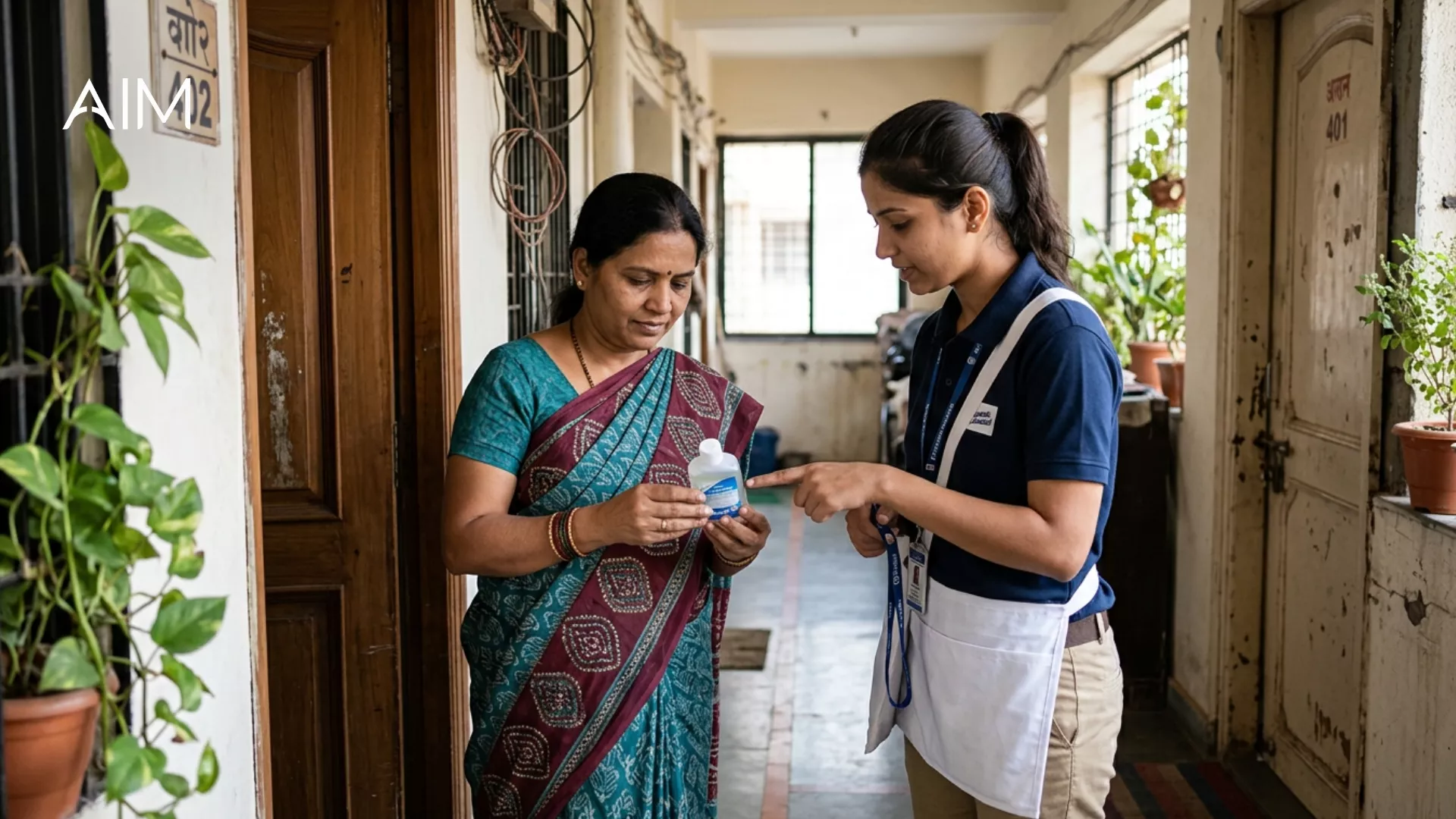
Society product sampling, also called RWA product sampling or residential society sampling, is the practice of giving free product trials to residents inside gated communities and apartment complexes. It reaches people at home, by household, in a trusted and permission-based space, which is exactly why it works so well for home care, food, baby care, personal care, and other household categories. But that same strength is why society selection matters more here than almost anywhere else. When you sample at home, you are choosing not a crowd but a specific set of households, and those households either fit your buyer or they do not.
Why does society selection decide the whole campaign?
Because a society is a filter you set before you spend. A mall crowd is random, but a residential society is a known population with a shared profile, income band, apartment size, age mix, family type. When you choose a society, you are choosing that profile in one move. Get it right and every sample lands closer to a real buyer. Get it wrong and you have handed premium samples to households that will never buy your category, in a campaign that will still look busy in the photos. The wrong society is the most expensive mistake in RWA sampling, and it is made quietly, at the planning stage, long before anyone notices flat sales.
How to choose the right societies to sample: the criteria
A good society list is built on a few clear filters, applied in order.
- Match the resident profile to your buyer. Start here, always. Define your buyer, young mothers, high-income households, value-conscious families, first-time home owners, and pick societies whose resident profile matches. Income band, apartment configuration, and age mix tell you who lives there, and that is what decides fit.
- Check category fit. Different products want different societies. Baby care wants complexes full of young families. Premium personal care wants higher-income towers. Everyday home care wants dense, broad-based societies. Match the category to the community rather than treating every society as the same audience.
- Weigh density and efficiency. A society with hundreds of the right households in one gated campus is far more efficient to sample than a scattered handful. More qualified homes per location means lower cost per reached buyer, so density among the right profile is a real advantage.
- Confirm access and RWA cooperation. A perfect society you cannot enter is not on your list. RWA and management-committee cooperation, permissions, and the willingness to host a sampling activity decide whether a society is actually workable, so factor access in early rather than discovering it late.
- Make sure you can capture and track. Choose societies where you can set up the capture step, a QR opt-in, a coupon, a quick profile at the point of trial, so the sample becomes a known, trackable buyer. A society where you can only hand out and walk away limits what the campaign can teach you.
- Spread for learning, especially in a pilot. Do not put the whole budget into one profile on day one. A pilot across a mix of society types tells you which profile actually converts, so the full rollout goes where the data points, not where the guess did.
The data you should have before approving a society
This is where good society product sampling separates from the blind kind. Before a society goes on the list, you want to know who lives there, not assume it. Pincode and locality income data, the society's apartment mix and configuration, the likely age and family profile, and the number of relevant households all help you judge fit before you spend. You are effectively building an audience map of societies, ranking them by how closely each matches your buyer, so the list is chosen on evidence. If a society cannot be profiled at all, it is a guess, and a guess with a fixed sampling budget is a risk you do not need to take.
Common mistakes brands make in society selection
The mistakes repeat across brands. The first is choosing societies by convenience, the ones the vendor already has access to, rather than by fit, so the audience is whoever was easy to reach. The second is footfall thinking, picking the biggest or busiest society as if size equals the right audience, when a smaller complex full of your exact buyer is worth far more. The third is one-size targeting, running the same society list for a baby-care brand and a premium grooming brand as though the residents were interchangeable. And the fourth is ignoring capture, sampling in societies where nothing is recorded, so even a well-chosen society teaches the brand nothing about who took the product or whether they bought.
Every one of these is a planning choice, which means every one of them can be fixed before the first sample goes out. Society selection is not the boring admin step before the real campaign. It is the campaign's most important decision.
How many societies, and how deep in each?
Choosing the right societies is not only about which ones, it is about how many and how deeply. Spreading a fixed budget thinly across too many complexes gives you a shallow presence everywhere and a real trial nowhere, while going deep in a well-chosen few lets you sample enough of the right households to actually read a result. As a rule, it is better to reach a meaningful share of the right households in fewer, well-matched societies than to scatter a handful of samples across dozens of loosely-matched ones. Depth in the right community beats breadth across the wrong ones.
Coverage within a society matters too. Sampling a small corner of a large complex reaches a slice of its households, so plan for enough presence, the right days, the right timing, and enough duration, to reach working parents and weekend shoppers alike, not only whoever happened to pass the gate on one afternoon. A society is only as valuable as the share of its right households you actually reach, and that is a planning decision as much as a selection one.
How AIM chooses the right societies
Our approach starts from the buyer and works outward. We define the exact household you want to reach, then map societies by profile, income, life stage, and household mix, and rank them by how closely they match, rather than by which is easiest to enter. We factor in density and access so the campaign is efficient and workable, and we build capture into the plan, a QR or coupon at the point of trial, so every sampled society returns known, trackable buyers instead of a headcount. For a first run, we favour a measured pilot across society types, so you learn which profile actually converts before scaling. The result is a society list chosen on data, sampled with intent, and measured to purchase.
So how do you choose the right societies to do product sampling? Start with your buyer, pick the communities where that buyer actually lives, make sure you can get in and can track what happens, and test a spread before you scale. Do that and society sampling stops being a hopeful giveaway near a gate and becomes one of the most precise, measurable trial channels a household brand has. The society you sample in is the audience you chose. Choose it the way you would choose the customer, because that is exactly what you are doing.












.webp)



























.png)