



Most brands choose a product sampling services provider the way they buy printing: lowest quote, biggest reach, fastest start. Then the campaign ends with a folder of activation photos and a number nobody can act on.
Choosing the right provider is the difference between samples that turn into buyers and samples that just vanish. Your name is on the budget, so the provider's weaknesses become your problem in the review meeting. Here is how to judge a product sampling services provider before you hand over your product and your money.
What a product sampling services provider should actually do
A real product sampling service is not a distribution vendor. The job runs the full loop: define who should try the product, get it into the right hands, qualify the person who takes it, track them to a purchase, and report what happened so the next campaign is sharper.
If a provider stops at "we will hand out 50,000 samples across 30 locations," that is distribution. Sampling is controlled market learning. Every sample should teach you something about a real potential buyer, or it was wasted. A provider who understands that talks about your buyer and your sales before they talk about headcount and locations.
The criteria that separate a partner from a vendor
Score every provider on the things you will actually be judged on later:
- Targeting. Do they define and reach your real buyer, or just book the busiest mall?
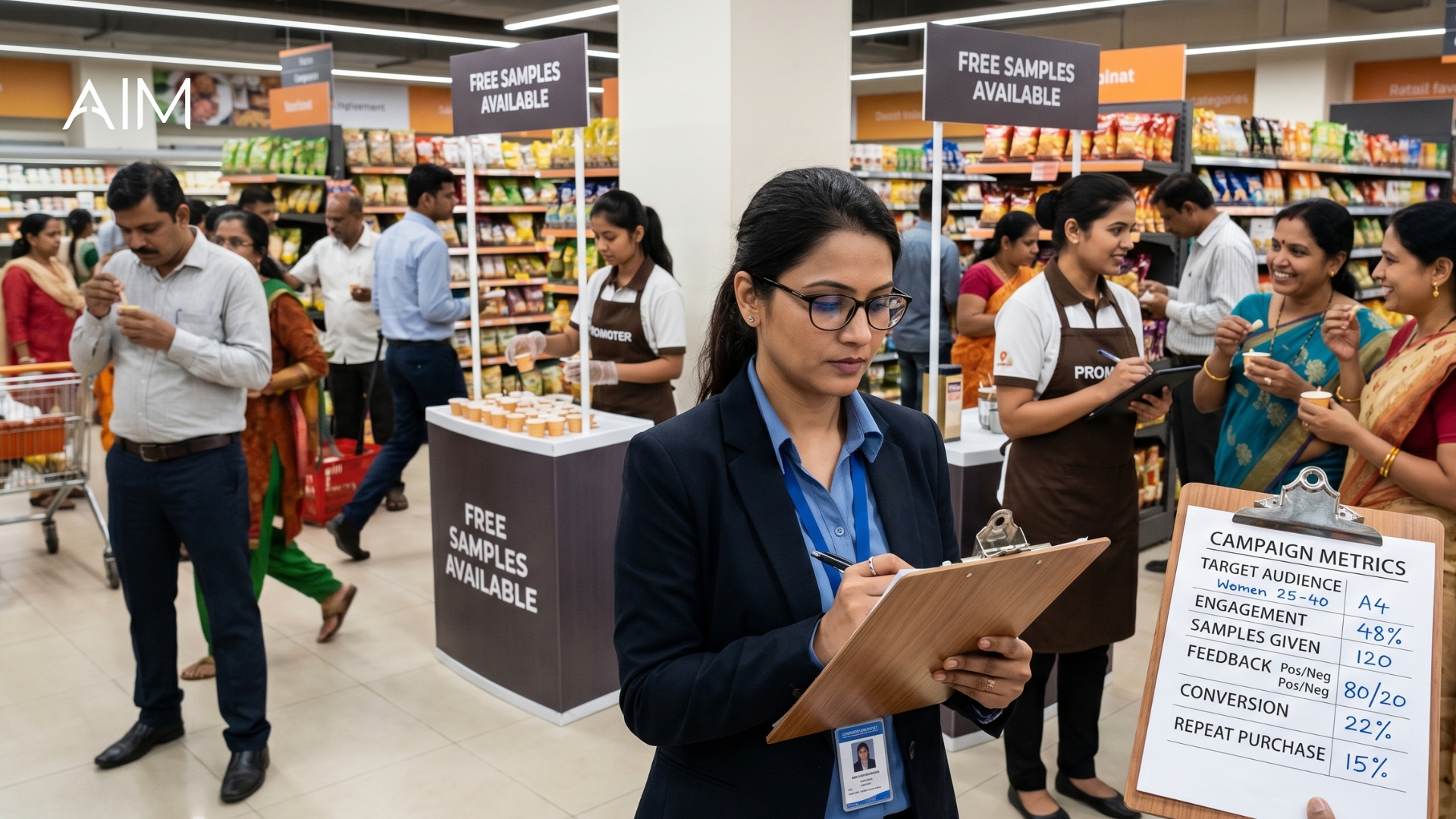
- Qualification. Can they confirm who takes the sample (category user, age, intent), or is it grab-and-go?
- Sample-to-sale tracking. Can they follow a sample to a purchase through a coupon, code, or redemption, or do they only report reach and photos?
- Execution quality. Trained in-house promoters they manage, or outsourced staff nobody supervises?
- Channel fit. Do they cover where your buyer actually is: modern trade, societies, IT parks, e-commerce inserts, digital?
- Reporting. A live dashboard with clean data, or a PDF of photos after the fact?
- Honesty. Will they tell you when sampling is the wrong spend, or say yes to everything?
- Costing. A line-item scope you can read, or one vague lump sum?
Distribution vendor or measurable partner?
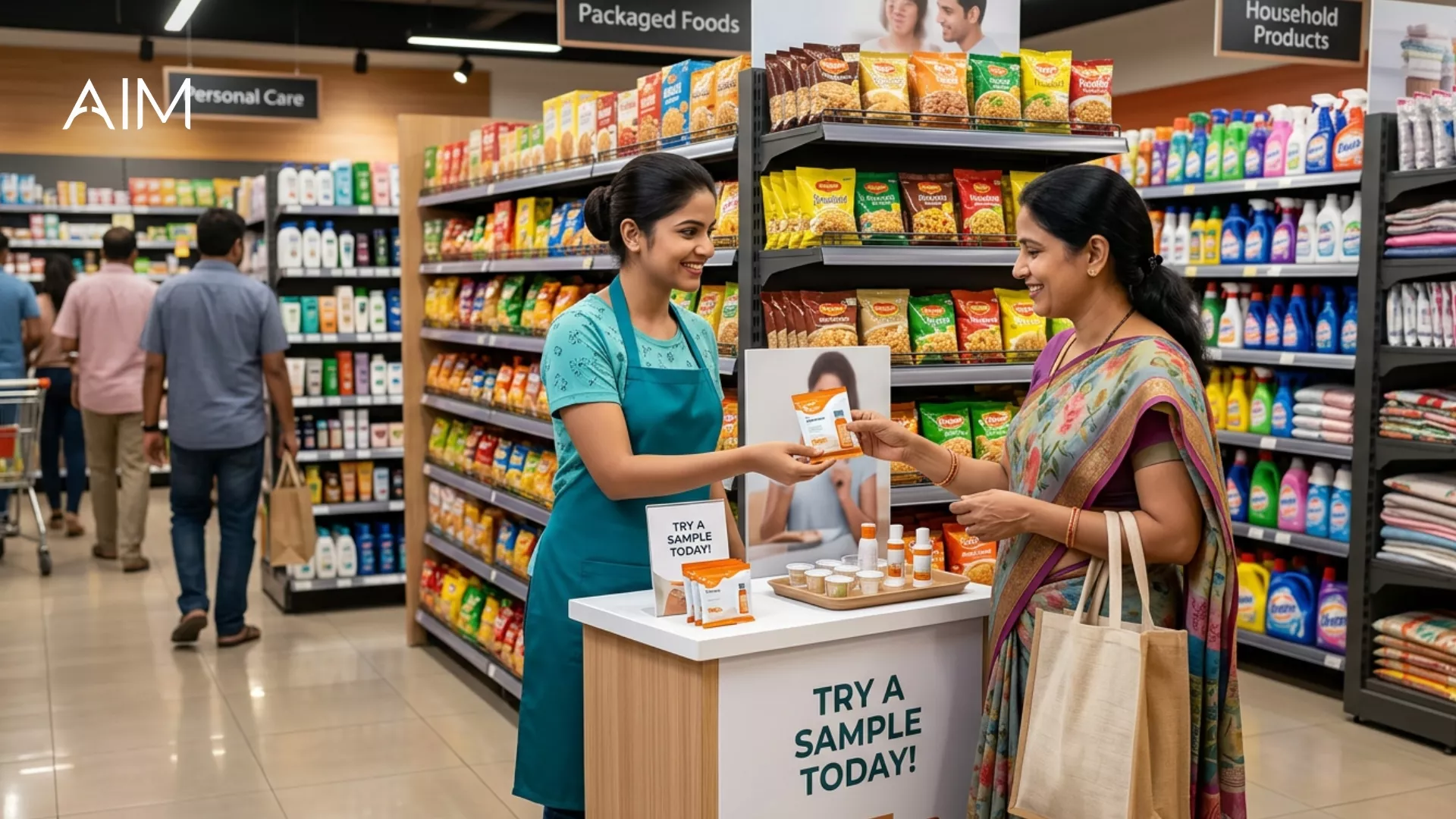
Here is the choice in plain terms. A distribution vendor sells you reach: bodies at a booth, samples off a table, a headcount and a photo set. A measurable partner sells you movement: the right people trying your product, tracked to a purchase, with data you can use to spend better next time.
The two look identical in a pitch. Both show you a busy activation and a big sample number. The difference shows up eight weeks later, when your CMO asks what it did to sales. One provider can answer. The other sends more photos. Choose for the answer you will need then, not the deck in front of you now.
Questions to ask before you sign
Ten questions will tell you more than any pitch deck:
- Who is the sample actually reaching, and how do you make sure it is our target audience?
- How do you qualify the person who takes the sample?
- How will we track a sample to an actual purchase?
- What does your reporting look like, and can I see a live dashboard?
- Who executes on ground, your own team or outsourced promoters?
- How do you prevent fraud and duplicate grabs?
- Which channels do you recommend for our category, and why?
- Show me a campaign like ours. What did it change, in numbers?
- What would you tell us not to spend on?
- What is included in the price, line by line?
Watch how they answer. The moment a provider gets vague about measurement, execution, or who takes the sample, you have your answer.
Red flags to watch for
A few patterns should make you slow down:
- The pitch leads with sample volume and footfall, not who gets reached.
- They guarantee sales. No honest provider promises that without knowing your product, price, and distribution.
- They can't explain how you will measure the campaign.
- They won't say who executes on ground.
- The quote is one number with no line items.
Cheap distribution to the wrong audience is not a saving. It is leakage.
How AIM differs
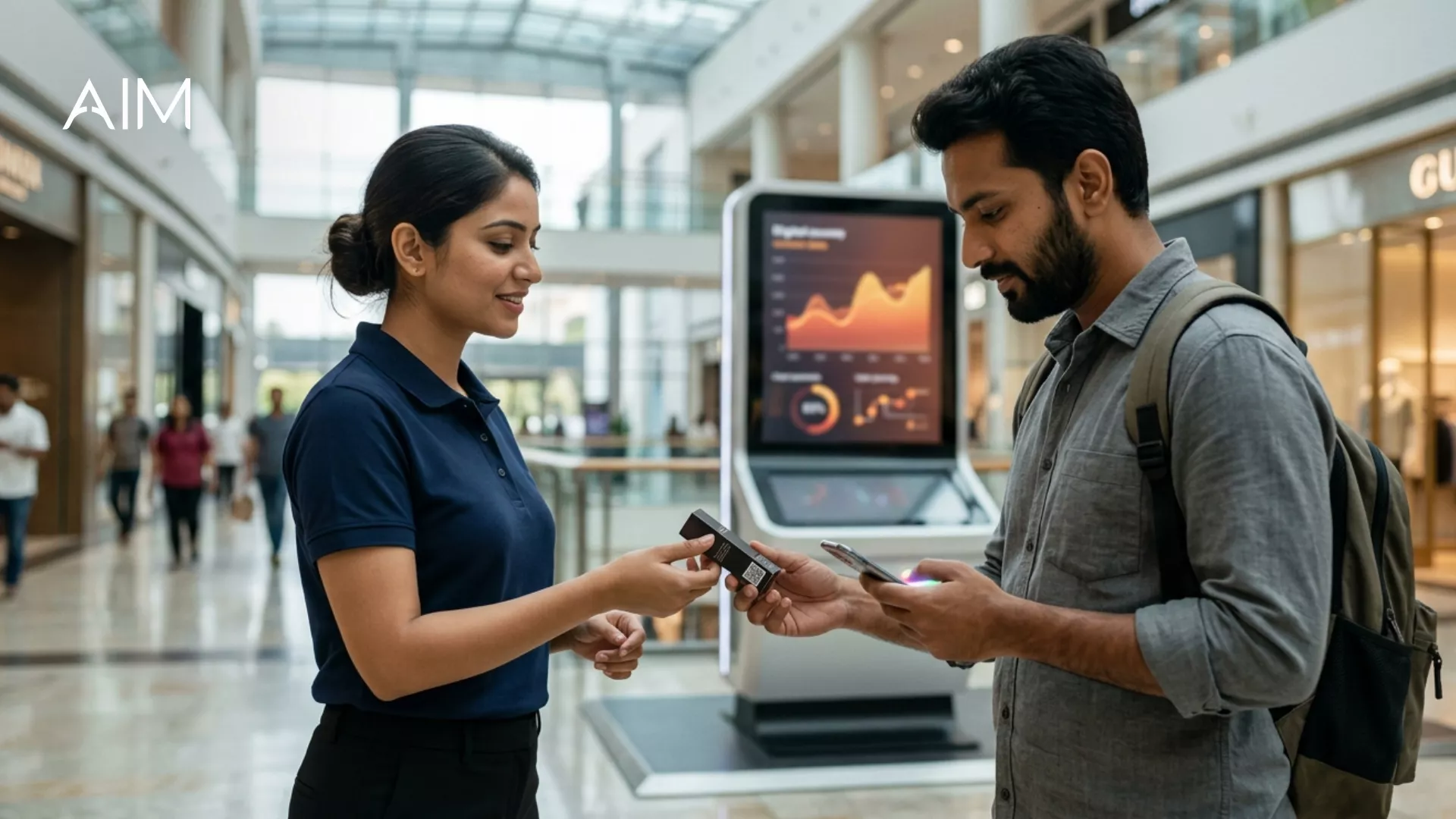
Full disclosure, since we run one: AIM is a data-driven product sampling agency. We target the audience before the campaign, qualify each person at the point of sampling, and track samples from trial to purchase on a live dashboard, across in-store, digital, RWA, IT park, and e-commerce channels.
The proof is in the tracking. In one home-care campaign across about 40 societies, the sample-to-purchase rate rose from under a fifth to roughly half in six weeks, because the samples went to category users instead of whoever walked past. None of that needed a bigger sampling budget. It needed the campaign pointed at the right people and wired to report back. And if sampling is the wrong spend for your product right now, we will tell you that too.
Choosing a product sampling services provider comes down to one test: can they tell you not how many samples they handed out, but how many turned into buyers. Ask for that number before you sign. The provider who can answer it is the one worth paying for.
















.webp)




















.png)